

 ADHD, is it a superpower or kryptonite at home or at school? The truth is, it is probably both depending on the situation. All students want to learn, they often feel a great deal of pressure to “learn” and be able to show that learning when it is called for. How can you help your child learn to use their ADHD as a superpower and minimize the effects of kryptonite? Here are three ways to ensure better outcomes.
ADHD and the Brain
-
- Understand that ADHD is a chemical imbalance in the brain. That means that without enough dopamine and other neurotransmitter chemicals, messages are disrupted on their way from one side of the brain to the other. When everything is working the messages make it, but often they make it half way or more likely, they vanish – sometimes temporarily and other times, without a trace – forgotten.
Probable causes: interruptions, distractions or brain and body are trying to make their needs known. Working memory is responsible for holding onto all the information we need at the time to complete a task or solve a problem. When it is working at capacity and something or someone interrupts, something has to go. Sometimes it is easy to get it back and other times, your child has to start back at the beginning adding more time and stress to whatever they were doing.
When an ADHD brain is hungry, thirsty, tired or fidgety, it is best to stop and give it what it needs. The brain is always monitoring and sends out signals to get noticed until the problem is resolved.
Suggestions: Make sure your child or teen gets enough sleep, eats healthy, is active and has a snack with protein before beginning homework. Praise their effort. Remove distractions that you can and save your questions for later.
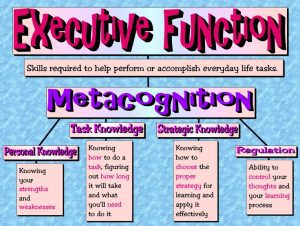
2. Impulsivity is often a kryptonite side effect of ADHD. It is like the pause button is broken, or that little voice in your head that warns you before you get in trouble or hurt, is asleep. I have also heard that it is a way the brain seeks out more stimulus because it is feeling like it doesn’t have enough. Impulse control is an executive function that isn’t fully developed until age 25, yet we ask children to control it long before then. Whatever the reasons, kids need a way to help themselves before they get in trouble.
Suggestions: One way to separate the impulsivity from the child is to call it something. Give it a name that you can refer to that separates it from your child’s sense of self. (Ex. The Cracken, Kevin (from the movie UP, Wacko Willy, etc.) Use humor when they show up and discuss what else Wacko Willy might have done instead.
Set clear expectations on behaviors before going somewhere. Make sure your child has a fidget in their pocket and use this 3-step model taken from Sarah Ward called: Stop, Think, Act.
When you notice emotions are building up, your child needs to: Stop (Take a few breaths, walk away, go outside, or chill in their room). Then have them think what started that, or what happened right before they got upset? Now, problem solve and brainstorm ideas that are more appropriate and use them to act next time.
3. Motivation is a challenge. An ADHD brain struggles with tasks that are boring, complex or difficult. If you are trying to motivate your child to complete something that falls under one of those categories, it may be as frustrating for you as it is for them. No one wants to mess up but, often those with ADHD are seen as messing up more often than their peers. The most common ways teachers and parents try to motivate is to take-away privileges. Or promising rewards so far in the future that the child feels they will never get it anyway. Rewards or punishments have little effect other than making children feel “bad” about themselves. This causes the brain to become stressed and a stressed brain cannot think clearly. That seems like a no-win situation.
Suggestions: According to Additude Magazine, “When you praise your child, it creates dopamine — the neurotransmitter his or her brain lacks, which causes the ADHD symptoms — and the dopamine helps to better control behavior. So, he or she can do more wonderful tomorrow.” Increase the positive/negative ratio as it takes 3-5 positives to outweigh 1 negative.
Learning happens when students are willing to learn, and have strategies that work for them. However, most important is that they feel good about themselves. So, use lots of praise (about their effort), humor and help them understand how they learn best. If school is a positive experience, then their superpower may one day make the world a better place.
Want to learn more strategies to help your child or teen succeed with ADHD? Then join our next Thriving with ADHD in the Family Parent Class.
 Teachers talk about the summer slide all the time. That downhill slope that learning often takes during the summer months. We all lose some level of skill when we don’t keep using it. For students, the summer slide can set them back a month or more having to review what they have already learned.
 I wonder who invented or designed the first closet. Maybe Mrs. Caveman got tired of tripping over Mr. Caveman’s club again and hid it behind a rock. Whatever the reason, closets can be either a black hole or a great tool for organizing. This month in celebration of Clean Out Your Closet Week, we are tackling the coat closet.
 Problem solving skills. We use them all the time at work, school, home and in social situations. They help us locate our keys, or solve a problem at work. For kids, they help them learn and think on their own without waiting to be told what to do.
 There are numerous theories about how the brain works, but what I have come to believe is that we can think of the brain as having three parts or personalities. They are the “robot”, the “Yoda” and the “monkey” brain.
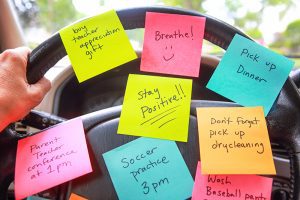
 There once was a Mama Bear who felt like she was part “day planner, authoritarian, and task master.” Every day she would go through the calendar and the to do list. She would gently remind the little bears what activities they had or what they needed to “get done” and also prompt the Papa Bear of what he needed to remember too. Often the Mama Bear would mention a task or problem that needed fixing, and unless it was urgent, or Papa Bear had free time at that moment….it often went undone. This continued for years until the Mama Bear realized she was doing all the remembering and everyone was depending on her to think for them and still things were not getting done.
 Motivation is that “intangible thing” that drives us to do something willingly. I’m sure you have felt it when you get into a project and the time flies by and you are making great progress. You may also have experienced motivation’s evil twin “procrastination.” That’s when no matter how hard you try you cannot seem to make progress. It is often accompanied by feelings of guilt, frustration, stress and anger.
 There is so much to think about as the new school year begins. With the pandemic continuing, each town has devised its own plan for what “school” will look like this fall. For some that may include half or full days, or a combination of two days in school and three remote or every other day or every other week. So many options, I cannot begin to cover them all. However, many of the schools are starting two weeks later than usual. Don’t let that fool you. It’s time to get organized! Where to begin?
 each subject on your device. Create a reminder for turning assignments in as that is often a step that can easily get missed. If you have a way to track what is passed in, then if it “gets lost” you have proof. Move the chargers to your new space so that your equipment does not have to be moved to be charged. Turn notifications off by putting privacy settings on while you are doing your homework. You can spend all night working or you can get it done effectively and have some well-deserved downtime for yourself. Which would you rather do?
 To organize yourself, may end up being the most challenging part of this school year. You have an obligation to yourself and your family to do your best to stay healthy. That requires regular health habits including sleep which can be difficult for teens. It will mean keeping your materials clean and switching out your mask daily. Students need to find time to be active, whether it is playing a sport or shooting hoops in the driveway, something that keeps those synapses happy.