
Building Independence Skills in Children and Teens with ADHD

Independence Skills for ADHDLiving and functioning with ADHD is not easy. ADHD is a chemical imbalance in the brain of the neurotransmitters like dopamine and serotonin which can make getting things done difficult. There is also a well-documented lag in developmental skills (especially executive function skills) of about three to five years in students with ADHD. Imagine trying to be a 15-year-old with the skills of a ten or twelve-year-old? Those skills are often things like; the ability to plan things out from start to finish, organization of thoughts and materials, remembering with a weak working memory, emotional control, and knowing when behavior or thoughts need to change which is called cognitive and behavioral shift and focus. Definitely skills needed for homework and life.

Do they ever catch up? Sometimes, but often they have already established their own way of doing things, formed “bad/ineffective” habits or have just given up and no longer feel good about themselves.

Breaking the Cycle of Dependence

If you’d like your child or teen to develop more independence, then first you’ll need to take a look at how you are “helping” your child or teen get things done. Do you often remind them of the next thing they need to do to get ready? “Did you brush your teeth? Where are your shoes?” When you provide the next step by telling them what they need to do, they do not have to think about it. They just have to wait long enough for you to notice that they are ready for the next step. Your child or teen is dependent on you providing the information that they should be doing for themselves. (Read “Are you Enabling or Empowering Your Child?” here.)

So, instead:

      • Ask questions, don’t tell them what to do (Ask, “What do you need to do next?”)
      • Help them develop their internal monologue by asking themselves questions (yes, it is helpful for them to be talking to themselves)
      • Build self-monitoring skills by helping them check in with themselves and also compare their behavior to others in the same situation. Role playing can be helpful for this.
      • Allow for some “cause vs. effect” situations to play out and don’t rescue them (as long as it is not too serious of course but still memorable)

Start with Training Wheels

When learning to ride a two-wheel bicycle, you wouldn’t just jump on and go – you’d start with training wheels or a balance bike and practice until you were ready to raise up the training wheels or go to the next step. The same is true when teaching independence skills. Start with the easiest step and provide support. As they become more capable, you can gradually withdraw or change the support. As their agency builds, so does their confidence.

Remember:

      • Break it into the smallest steps and provide support until capable (scaffolding)
      • Start with the end in mind and work your way backwards
      • Provide short term rewards (rewards are motivating when provided frequently)
      • Encourage using a beginning, middle and ending approach to new routines to help them stick
      • Body doubling can help
      • Think aloud to provide cues for modeling behavior
      • Provide visual cues and structure
      • Movement breaks help to increase the dopamine

Developing Life Skills-Ready to Ride

In order for children to become independent, they need to be able to check in with themselves and monitor how they are doing. It’s also important that they be able to plan ahead and that involves thinking about the future. With ADHD, there is “now and not now” and many things don’t come into focus until they are really close. Helping your child/teen develop routines that work for them and are consistent, will help them thrive and avoid that last minute adrenaline rush (it actually wears them down).

Practice, Practice, Practice

      • Develop a morning routine that gets them off to school on time and calm with everything they need
      • Have them set up everything they can for tomorrow to reduce the last-minute searching
      • Emphasize eating healthy and regularly and limit the ultra-processed foods that interfere with the brain chemicals.
      • The three-to-five year psychological and emotional delay can interfere with your child’s understanding around hygiene as well as, the multiple steps in the process and possibly some sensory issues too.
      • Clean body, hair and nails
      • Clean clothes (limit choices to outfits they wear-remove extras)
      • Take 10 minutes to have everyone pick up their things including their bedroom
      • Create a wind down routine and a bedtime routine that helps them get the hours of sleep they need.
      • Sundays are a great day to reset for the upcoming week.
      • Use a “done list” to emphasize progress

All of these skills have multiple steps and so you can use the Life Wheel (see below from Cindy Goodrich) to find out where to start. On a scale of 1-5, mark where your child/teen thinks they are for each skill. Then pick the lowest and start with building that routine. The summer is a great time to start working on the routines that matter the most. You’ll be building agency, confidence and capability!

Living and functioning with ADHD is hard, so praise your child and teen’s effort often and wherever you can. Your child is learning to develop the life skills that will help them succeed in a world that is not ADHD friendly and any effort is noteworthy.

The Life Wheel can use any categories you feel are needed. (As listed: self-advocacy, stress management, study skills, attention regulation, note taking, time management, organization and essay writing.)

Other Examples:
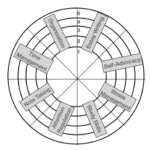
Life Skills Wheel ( Cindy Goodrich)

            • Get ready independently
            • Hygiene practices
            • Bedtime routine
            • Self-monitoring
            • Personal relationship skills


Two apps to help: Habitica and Forest and the Life Wheel to get you started.

What is one question your child or teen asks you daily that you know they know the answer to?



It is the Little Things That Devour Time

Time running outHave you ever felt like time was getting away from you? Me too!

What I have realized is that it is often the little things, like the appointment I need to make, the bill I need to look into or something else that although it probably won’t take a lot of time, it is enough to disrupt my workflow and focus. Then when I try to get back to what I was doing – it takes extra time. The research actually says that once that focus is broken, it can take about 25 minutes to get back to that same level of focus. That’s 25 minutes that could have been used to complete what I was working on.

As a former professional organizer, I know all about time blocking and task batching for saving time. Both of those strategies involve grouping similar tasks together and setting aside a specific time to get them done. By focusing on one type of task, you are able to maintain better focus. That saves mental energy and because you are not switching from one type of task to another you can finish them faster – no extra time spent refocusing. That also means your brain can focus easier without having to distract you as its way of reminding you of the other things you have to do. That means less stress.

What about the tasks that don’t fit into one category? The appointment you need to make, the membership you need to cancel (Audible for me) or the phone call you have been putting off? How do you get those various nagging tasks done? Solution: Add an Admin Block. A set time and place for focusing on those tasks only and completing as many as you can.

Who?

    • Self
    • Significant other
    • Family members (ex. teens that have college paperwork to get done)
    • Friends

When?

    • Weekend morning
    • Early afternoon
    • Evening

What to do?

    • Start a list of those nagging tasks and include the details you will need like the email or phone number
    • Create a folder (physical or digital) to hold key information
    • Set an appointment with yourself or group for when and how long

When the time comes, grab a beverage and a snack and get to work completing the tasks. Using the Pomodoro method of working for 25 minutes and taking a 5-minute break can help you stay focused. That little break helps recharge your brain and processes the new information. If you’re working with someone else, then you are benefitting from the body doubling strategy we often talk about and the accountability too.

Here is a blog from my good friend and Productivity Coach, Colleen, about an Admin night at a local Chicago area restaurant. It may give you ideas on how to make your admin block more fun and productive.

Celebrate whatever you accomplish. Those nagging tasks will no longer be taking up space in your brain. That means fewer distracting thoughts and when they do pop up you can park them on your list for the next Admin Block. Less mental clutter, more calm, and improved productivity. It’s a win-win!

Isn’t it amazing how much stuff we get done the day before vacation?   ~Zig Ziglar


Image by Lynda Smith-McDaniel


Four Steps to Reset Your Week

Reset your weekIt’s Sunday evening and out of nowhere comes that uneasy feeling of dread. It starts small, but then as you think about your chaotic week ahead it begins to build, filling your brain with to-dos, appointments, problems to solve and unfinished leftovers from last week. All of these “extras” can impact your capacity to handle your most important priorities – those of yourself and your family.

Think of your computer when you have a dozen or more open tabs. How long does it take for you to find the tab you really need? Or have you ever put off changing the hoses on the washing machine? We all know the damage that can occur if that task is neglected too long. So, getting back to homeostasis (your baseline) can prevent other problems from sabotaging your week.

How can we get things back under control? Well, it starts by regaining control of what you can. Ready to learn how?

Enter the magic of a “Reset.” Webster defines “reset” to mean: “to set, adjust, or restore something to a new or initial state.”  It’s really about taking some time to think about what would make your life easier and then putting some things in place (or back in place) to help you glide through the week.

Where are your stress points? Think about the little things that seem to add to the stress of your week. How can you adjust or improve those things? Did you have to search for anything? Forget anything? Were you on time or late? Did you have to make an unscheduled stop at the grocery store for dinner ingredients? Whatever it is that causes you to pivot, see what you can do to prevent it from happening this week.

Our weekly reset process has just 4 steps. Only you can determine what a “reset” looks like for you and your family. It can be as long or as short as necessary and can occur on any day of the week. I like Sundays because my Mondays start with a meeting at 9:30am and I don’t want to be late! I encourage you to find what works for you and your family and make sure your home remains a sanctuary rather than a reflection of the chaos out in the world. Here’s how to start:

Reset Step 1: Review

Take a step back as if you were an outside observer and mentally go through your week. What do you notice? Where are the challenges and what can you do to mitigate them? It’s about the choices you make and when you make them. Think about what will make this week less stressful.

    • What went well last week? Celebrate those wins!
    • What didn’t go well last week?
    • One thing I can change or improve:

Reset Step 2: Record

Our working memory is designed to hold onto information while we need it. Unfortunately, it can only hold about 7 thoughts at a time. If you try to hold onto more, it may “drop or forget” something else. Using a planner, index card, post it or calendar to keep track of date specific things makes it less likely you will forget something. Digital or physical, doesn’t matter as long as you trust where you noted it.

    • What is important for this week (appointments, deadlines or responsibilities)?
    • Add in some self-care time for yourself
    • Do you want to decide about meals for the week?
    • What are your top 3 priorities for this week?

Reset Step 3: Reclaim

Reclaim your physical spaces. It is not about organizing your entire home. It is about looking at the areas that you use most often and determining what would make things run smoother.

    • Reset an area that will make your week run more smoothly (desk, kitchen, laundry)
    • Set a timer for 15 minutes and see what you can get done (get the family involved too)
    • Focus on progress, not perfection
    • Other ideas:
      • Clean up the mail
      • Clean out your pocketbook, backpack or car, or fill up the gas tank
      • Tackle one task that has been bugging you

Reset Step 4: Reboot or Recharge

Lastly, it is important to take care of yourself. As Dr. Phil said, “You have to take care of yourself before you can take care of others.” Taking time to recharge benefits your health, your sleep, your memory, and resting your brain can increase your focus and enhance your problem solving.

    • What do you need to recharge?
    • Take a walk in nature (just 20 minutes can calm and reset your brain)
    • Take a nap, or just sit
    • Other Ideas:
      • Yoga or stretching
      • Read
      • Music or Dance party
      • Go screen free for the day

The Sunday Reset is the first step in setting yourself up for a successful week. When you start from a manageable place, rather than continuing to pile the new week onto last week’s leftovers you save time, energy and brain bandwidth. And that is good for you and your family.

What will it feel like to have more control over your week?

ADHD and Overwhelm: Finding Your Reset Button – 5 Ways to Reset and Refocus

frog overwhelmOverwhelm, that feeling that your brain is overloaded and cannot hold one more thing. It has a way of making everything seem like a priority whether it is or not and it is struggling to sort through what to do. The input can be from mental, emotional or even sensory overload, but it effectively paralyzes your thought processes. Your emotional center (the amygdala) takes over and triggers the fight, flight or freeze response.

Overwhelm can happen to anyone and it can come and go based on whatever else is happening in your life. With an ADHD brain, and its unique way of thinking, there are some additional things to consider.

Do you….

    • Need to do a “body check” to see if you are hungry, tired, restless or frustrated?
    • Need to reduce the distractions around you?
    • Need to adjust anything in your environment?
    • Need to change your thinking from “all or nothing” to something more flexible?
    • Need to get it all out of your head?
    • Know if your executive functioning brain “bank” is overdrawn from too many decisions, too much planning, or too many to-dos?

If you answered “yes” to any of the above questions, then you know what your first step should be in reducing that overwhelm. There are also some simple steps that may help clear out what is causing your overwhelm.

    • Do you need to reduce all the thoughts swirling in your brain? Then do a “brain dump” or “cranial cleanse” as my friend calls it. You write down everything that is on your mind- no censoring it – just get it out on the paper. You can sort it later.
    • Break down projects into their individual steps/tasks.
    • Visualize the end before you begin. What will it look like when it is complete? Now work backwards. Make sure it is broken down into the smallest of steps.
    • Do you need more information?
    • Can someone else help you with it?

Once you have answered these questions, then it is time to help get the overwhelm out of the body and brain. Here are five strategies that can get you moving forward again feeling less overwhelmed.

Overwhelm Strategy #1: Move the Stress Out of the Body

For many ADHD brains, stress builds as restless energy. Movement helps reset the nervous system. Movement often works faster than trying to “think” your way out of stress.

Ideas

    • 10–15-minute walk (outdoors is best)
    • Dance to one favorite song
    • Jumping jacks or trampoline time
    • Stretch or yoga break

Overwhelm Strategy #2: Give the Brain a Sensory Reset

ADHD brains often feel overwhelmed by too much sensory input. Intentional sensory tools can calm the nervous system. These aren’t distractions—they’re regulation tools.

Ideas

    • Fidget or stress ball
    • Weighted blanket or lap pad
    • Noise-canceling headphones
    • Holding something cold (ice cube, cold drink)

Overwhelm Strategy #3: Create a Brain Break Ritual

Short breaks help prevent ADHD stress from building into overwhelm and gives your brain time to process and be ready for more. Think of these as mental reset buttons, not procrastination.

Ideas

    • Take a walk out in nature (15 minutes will reset your brain)
    • Add to your “done list”
    • Drawing or doodling
    • Journaling or reading for 5 minutes
    • Sitting with a cup of tea

Overwhelm Strategy #4: Simplify the Environment

Too many visual, auditory or mental inputs increase stress for ADHD brains. It can be difficult to filter out completely, so try to reduce what you can. Small environmental shifts can create big cognitive relief.

Ideas

    • Clear just one small surface in your field of vision
    • Turn off background notifications (put phone in a different room)
    • Work in a quieter room (use noise canceling headphones)
    • Reduce visible clutter in your work zone
    • Work with a buddy (body doubling) or join our Work it Wednesday session from 10a-12p EST.

Overwhelm Strategy #5: Use a “One Small Thing” Reset

When the brain feels overwhelmed, the fastest way to reduce stress is momentum. Progress—not perfection—helps calm the ADHD brain.

Ideas

    • Put away 3 items
    • Do a “brain dump” or “cranial cleanse” by writing everything down
    • Send one email
    • Start a timer for 5 minutes (and stop working when it goes off)
    • Do one small task (the smallest step you can think of)

When an ADHD brain feels overwhelmed, the goal isn’t to force focus—it’s to stop and identify what is happening and then to create moments of regulation that can help you reset. Small resets like movement, sensory tools, taking a break, or doing one simple task can help the brain relax and move forward again. Coaching can help you identify and develop personal strategies to decrease the occurrence of overwhelm and learn to detect the warning signs.

ADHD Empowerment Through Communication

ADHD Empowerment SignAs we close out another ADHD Awareness/Empowerment month, I realize that learning about what ADHD is and isn’t and normalizing it, is a great start but communicating that information to friends, family and school officials needs to be the next step. Let’s talk about how you can help your child understand their ADHD, learn to advocate for their needs and help family and friends recognize and support them too.

Empowering Parent Communication

As a parent, your responsibility is to be sure your child or teen is healthy, safe, fed, sleeps enough and is loved. For those with ADHD, body awareness can be a real challenge. Their ability to focus (some say, “hyper-focus”), can interfere with the signals that the brain is sending to eat, sleep, move or even hit the bathroom. Those signals can be ignored until they become urgent – that’s what “hangry” looks like – often with physical actions that seem more like an overreaction.

Emotions can quickly overwhelm all rational thought especially when the body’s needs are not being met. Frequent “body check-ins” can help your child or teen learn to pause and check in with their body in order to recognize the signs of hunger, thirst, tiredness and stress etc. before it is too late. There can be a 3-to-5-year delay in emotional, social, and psychological growth for those with ADHD so, helping them learn to recognize their physical needs at certain times of the day can help them establish healthy habits.

Working together to help your children establish systems and routines for maintaining their health, homework habits and developing organizational strategies (another challenge for ADHD) can build lifelong habits and reduce the stress level in the home.

Empowering Communication Between Parents and Children

ADHD is a neurobiological (chemical) glitch in the brain that impacts the regulation of dopamine and other neurotransmitter hormones causing differences in the way the brain functions and how the executive functioning skills develop. It is not good or bad, just different. This is important to share with your children.

Children with ADHD often struggle with situational awareness – not understanding what is happening around them and what they should do next. This can range from misinterpreting someone’s facial expression (and not getting the right message of urgency) to inappropriate behaviors that may look intentional but are really an impulsive response due to the lack of understanding.

Here’s how you can help:

  • Prepare children for new experiences ahead of time
  • Practice the types of behaviors that are appropriate and talk about what is not
  • People watch to practice noticing facial expressions and body language
  • Give children and teens chances for a “do-over”
  • Agree on a “secret code word” that warns when behaviors are pushing the limits
  • Practice short “scripts” to use for self-advocacy when they are put on the spot
  • Discuss and evaluate concerning behaviors after everyone has time to think about what happened and can calmly discuss options

Empowering Communication with Friends, Family and Teachers

Until the world understands and accepts the challenges that those with ADHD face, we not only have to advocate for them but teach them how to advocate for themselves. Help them figure out the kinds of strategies and supports that work for them and to practice ways of asking for them.

If you have friends or family members that don’t understand ADHD and how it impacts your family, take some time to explain the basics – not intentional, just biological. Mention one- or two-ways ADHD impacts your child and share strategies that might help the family member interact in a more accepting manner with your child. Focus on the positives with the family member and your child. You can recommend resources if they are interested in learning more but most importantly maintain open communication and answer any questions that you can.

If your child is on an IEP or has a 504 plan, you may be the one advocating for them until they are able to advocate for themselves. The accommodations that are provided in either of those plans provides flexibility and helps to ensure your child can succeed. For example, being given extra time is not an excuse to turn things in late. It provides a cushion of time without impacting their grade, if they are unable to complete the assignment within the time frame. This prevents undue stress and frustration when their ADHD brain is too tired or stressed to be able to think clearly.

Make sure your teen is familiar with the accommodations in their plan and help them practice ways to advocate for the things they need. Something as simple as a seating preference (not at the back or in the middle of the room) can have a huge impact on your teen’s ability to focus. Teachers are often unaware of how much time homework takes for someone with ADHD and if your teen is “masking” while in class (i.e. pretending everything is fine when it is not) they will assume all is well. It is not. If they cannot advocate for what they need or they are ignored, then please step in and communicate with the teacher and/or whomever is in charge of the plan they are on.

The goal is to have a good school experience and learn how to learn. The students that struggle the most are often the ones that think outside the box and may someday make the discovery the world needs. Let’s encourage them!

The Power of Reflection – What I Learned This Summer

Sunday Reflection under a treeSeptember is often thought of as a “second new year” as the weather cools and kids head back to school; our routines shift and new schedules make September feel like a new start. It is the perfect time to pause and reflect on the kind of life you really want. What did summer reveal to you about how you want to live, work and feel as we head into the busiest season of the year?

What Can We Learn?

As I look back and think about the summer, I am looking for the learning. No, learning is not the right word. I think it is more about finding the lessons and to learn from them. For example, what recharges me, or drains me? What do I need more of or less of? You get the idea.

I remember the heat and the humidity (here in the northeast we call it HHH – hazy, hot and humid). It definitely limited my outdoor activity and I felt the weather was at times, holding me hostage. My routines were inconsistent, and my newly retired significant other was flinging his very ingrained routines out the window. (There is definitely an adjustment to this new phase.)

There was time for some travel, fun and family activities as well as, home maintenance and landscape projects to complete. I discovered that projects often take much more time than you think even if someone else is doing the work.  The lesson here, is don’t waste the summer on landscape projects.

What did you notice about your summer?

Questions to Consider

  • What do you wish you had more (or less) of?
  • When did you feel the most energized and happy?
  • What did you learn about your boundaries (consider your time, energy, commitments, etc.)
  • Did you spend your time on what is important to you?
  • What insights have you gained from reflecting on your summer?

How to Turn Your Insights in to Action

Reflecting brings awareness about what is truly important to you and what is not. And awareness is often the first step to creating change. So, if you noticed for example, that you liked the slower pace of summer or having fewer commitments, then your next step would be to figure out how to turn your new awareness into action. Perhaps, creating new structures or routines to protect those boundaries or taking time to really consider the “cost” of taking on something before committing to it. You decide.Reflection brings changes

September is an opportunity to reset – not by making “resolutions” or setting unrealistic goals, but by choosing what matters and letting go of what doesn’t. Simple, small changes or tweaks often make the biggest differences.

In coaching the three steps of Awareness, Action and Learning can help transform your awareness, a step at a time into the life you envision. Coaching can guide you into designing “your roadmap” to that life.

Time Blindness is Real – 5 Strategies to Help

Time BlindnessHave you ever looked up and wondered, what happened to the last hour? Or scrambled to get out the door realizing you will be late again, even though you had plenty of time to get ready? Well, you are not alone – it happens to a lot of people. It is called “time blindness” and it is related to how you sense or feel the passage of time.

What is Time Blindness?

Time blindness is the brain’s struggle to appropriately sense, track and manage your actions based on a timeframe. It is a result of the chemistry of the brain and can interfere with your schedule, your priorities and your ability to get things done and/or meet deadlines. It may look like:

  • Constantly underestimating or overestimating how long tasks take
  • Feeling like there’s only “now” and “not now”
  • Difficulty transitioning between tasks
  • Forgetting future deadlines until they’re urgent

Why Does It Happen?

Most likely it is an executive function skill that develops in the prefrontal cortex and not something you can control. You can however, try to figure out where you struggle the most.

Time estimation: Is it in estimating how long things will take, or how much time has passed? Being able to “feel” how long it has been can be a challenge.

Temporal foresight: Is about managing the time you have and figuring out when to start on that big project rather than waiting until the deadline is close? It is important to be able to plan out the steps and calculate how much time you will need (in a logical manner).

Working memory: Your working memory holds the information you need in the moment. It has a limited capacity and all it takes is one more thing to remember and you may lose the other 7 things you were holding onto.

Emotional dysregulation: When emotions are running the show, the last thing your brain is focused on, is the passage of time. You may end up making impulsive decisions, procrastinating or hyper-focusing on lesser priorities.

So, when you lose track of time; it’s your brain, not your willpower.

This can result in:

    • Chronic lateness
    • Last-minute scrambling
    • Thinking you have time for that “one more thing”
    • Trouble starting tasks or projects with long term deadlines – or not being able to break large projects into manageable steps and spreading the workload out over time.
    • Struggling to plan ahead
    • Under or overestimating how much time something will take

Strategies to Help:

1. Make Time Visible and Audible – use analog clocks rather than digital as they show the passage of time more clearly. Use visual timers like a time timer or a countdown app and set backup alarms or reminders on your phone for the time you need to leave. Don’t dismiss the alarm until you are actually leaving. Make sure there is a clock within view.

2. Break down time into Blocks – You can divide your day or your activities into blocks that focus on similar tasks rather than an ambiguous plan like “work all morning.” Adults can really only focus for 90 minutes at a time (unless they are hyper-focusing), so make sure your blocks are a manageable size.

Try:

    • 25-min Pomodoro sessions with 5-minute breaks in between
    • 10-15-minute “power sprints” where you work until the timer goes off and then can switch to something else….unless you want to continue.
    • Build-in transition time so your brain has time to process the finished task before starting something new.

3. Anchor Your Actions – also known as habit stacking. Habit stacking is where you attach a new task or habit onto an already existing habit. Make sure it is something you already do regularly without having to think about it, so you can add the new task/habit onto it. For example: “After I finish breakfast, I will check my planner and priorities.”

4. Check Your Reality – Think about the tasks you do regularly and estimate how long you think they take. Time yourself and compare your estimate with the reality. Were you close, or way off? Save this information for when you need to meet a deadline.

5. Work Backward from the Deadline – A deadline, whether it is for a project or an appointment has several details that need to be broken down into their manageable (single task) format before you can estimate when to start the process. For example: If you have an appointment at a specific time, you will need to think about everything you have to do to be ready for it, including what time to leave to be on time. By breaking the big task (arrive on time for appointment) into smaller actions you will need to work backwards. Start with the appointment, now how long will it take to get there? That’s the time you need to leave. What needs to be done before you leave? Do you need to eat, or get dressed or put your work away? By working backwards, you can subtract the times for each step until you have the time you need to do the first thing. Often times we think, it should only take 15 minutes to get there. But in reality, that’s with no traffic or red lights and you forgot to add in finding a parking space and walking to the appointment. Adding a few extra minutes for a contingency plan may save you some stress of hurrying and provide a few minutes of scrolling time.

If you struggle with time, then try these strategies or create your own to support you rather than thinking there is nothing you can do about it. If you’d like some coaching around this topic, our 4 week, 45-minute session, ½ price special begins in July 2025. Find out more: https://square.link/u/LVY4DSS1 or email me: laine@thinkinganddoingskillscenter.com

Coaching Prompt:

“When was the last time I ran out of time—or underestimated how long something would take? What systems might help me next time?”

Does Homework HAVE TO be a Battle?

Homework frustrationThe simple answer is NO! Homework does NOT have to be a battle.
The purpose of homework is to help reinforce the learning from class. It is also to encourage responsibility, independence, the development of time management skills (which are really self-regulation skills) and practicing problem solving strategies. Sounds great, is that what is happening in your home?

Or are there tears, tantrums, yelling, defiance and meltdowns? Or maybe it’s bribes, rewards or threats of losing what they hold most dear. What’s a parent to do if the kids are just not motivated to get started on their homework?

Where’s the Motivation?

Motivation is a challenge. An ADHD brain struggles with tasks that are boring, complex or difficult. If you are trying to motivate your child to complete something that falls under one of those categories, (like some homework) it may be as frustrating for you as it is for them.

“Motivation is a set of habits and routines, guided by your values and your identity, that you carry out every day.” “When you combine purpose, energy and small simple steps, you get sustainable motivation.” says Jim Kwik, author of Limitless.  Are you ready to change this?

How to Make Homework Less of a Battle

Create some structure – the school day is very structured. Students know what is happening each day and at what times. There are routines in the classroom that are followed and the expectations are clear.

James Clear (of Atomic Habits fame) says, the smaller the step, the more likely you will be motivated to do it. He also suggests that you schedule when you will work on it because you are more likely to work on something that has been scheduled rather than waiting until you feel motivated to work on it. Waiting for that feeling – rarely happens but you can help encourage motivation by setting up a routine that tells the brain it is time to get working on “x”. Clear calls it a “pregame routine” where it starts a series of motions that are simple to do but moves you in the direction of actually working on whatever it is. We’ll call it the “pre-homework routine.”

Pre-Homework Routine

At home, there should be clear expectations, structure and routines as well. Starting with what happens when they come home from school. Decide together what is the littlest thing they can do? For some that might be closing the door – others it might be taking the lunch box out of the backpack and putting it in the kitchen. Baby steps to start and then:

  • A protein snack will help recharge their tired brain
  • Taking 30-45 minutes of downtime (especially outdoors) will help to reenergize them.
  • Screens are a distraction and a time suck, so should be avoided until after the homework is done.

Homework is your child or teen’s “job” – they are accountable to their teacher, but more importantly to themselves. If they don’t do the work, they will get the zero. If they are not motivated by grades, just keep showing them the grade portal and the impact of each zero. No one really wants to fail. Sometimes, all the fuss is not about starting the homework at all. Sometimes, they are feeling overwhelmed or frustrated or even confused. They might be looking for your attention or trying to manipulate you into letting them disrupt the routine. Try to understand what is really bothering them. Offer some options, show empathy and encourage them but don’t let them manipulate you into postponing the homework routine.

  • Set a “homework time” to begin each day after their initial break. They can take short 5-minute breaks after each 25 minutes of work time (depending on age).
  • Designate a desk, table or counter as the homework zone and make sure it is clear and relatively distraction free. Check the chair and the lighting and put an analog clock within view.
  • If they choose not to work during that time, make it clear there will be no homework being done after a specific time. They need to have time to “chill out” between homework and bedtime.

The role of the parent, just like the teacher, is to set clear expectations around the homework routine and process. You are helping them create habits that will serve them their whole life.

  • Encourage independence but be available to guide them to their own solutions when stuck. Don’t provide answers.
  • Keep it positive. Praise their effort and persistence rather than their intelligence or skill. According to ADDitude Magazine, “When you praise your child, it creates dopamine — the neurotransmitter his or her brain lacks, which causes the ADHD symptoms— and the dopamine helps them to better control behavior. So, he or she can do more wonderful tomorrow.” It also helps to increase the positive/negative ratio. Do you know that it takes 3-5 positives to offset 1 negative comment?
  • Check on them occasionally but don’t interrupt them unless they are clearly distracted. Each interruption adds more time to regain their focus.
  • Be consistent as much as possible. Use a calendar that everyone can see and let the kids know what is coming up.
  • Each week, help them “reorganize” themselves by cleaning out their backpack, checking the agenda for what is coming up and depending on their age, making sure they have clothes for the week or have them do their laundry.

It will take longer than you think for the homework routine to become mostly automatic. Use a timer or something that lets everyone know it is time for it to start and stick with it. Creating routines reduces the stress of not knowing what to do next, helps a struggling working memory and best of all takes the battle out of the homework.

Learning happens when students are willing to learn, and have strategies that work for them like a homework routine. However, most important is that they feel good about themselves. So, use lots of praise (about their effort), humor and help them understand how they learn best. If school is a positive experience, then their superpower may one day make the world a better place.

Slow and Steady Makes A Productive Day

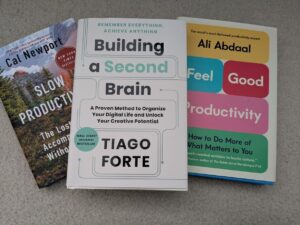
Productivity BooksEvery day in multiple ways we are bombarded with information. Whether it is auditory, visual or both, information is all around us even if we don’t want it to be. According to an article in the NY Times, in 2009, as quoted in Building a Second Brain, by Tiago Forte, “the average person’s daily consumption of information now adds up to…34 gigabytes” or about 174 newspapers worth per day. A quick Google search shows it is now up to 74 gigabytes or 16 movies worth a day! Who could sit for that long?

There’s a problem with too much information whether we are consuming it ourselves or are just being exposed to it. We can’t hold onto the information long enough to use it or remember why we read it in the first place. Even if you could remember it, could you find it? What is the point of this new knowledge we’re learning if we can’t use it to improve our lives in some way? Students must wonder about that all the time.

What is Productivity?

If you’ve ever felt overwhelmed or like your brain was about to explode, then you know it is a stressful feeling and it interferes with your ability to get things done.

We all want to be more productive; it is one of the most common New Year’s Resolutions. Well, chatgpt defines productivity as, “how efficiently and effectively you use your time, energy, and resources to accomplish tasks, achieve goals, and improve your overall quality of life.”

To improve your overall quality of life is the key point, because what is the point of doing more if you just feel unhappy, stressed, overwhelmed, or brain dead?

How to Start

In order to make good decisions about the tasks and projects that are important to you, you need to know what they are. When was the last time you wrote down EVERYTHING that was on your mind? (I call it a brain dump but some prefer the term a cranial cleanse.)

Remember a project is anything that has two or more tasks/steps before it is complete. Maybe just think about the projects you would like to complete in January. No, you can’t do all 100 of them, but you might be able to finish 2 or 3 of them and remain sane at the same time. How would that feel?

Steps to Slow Down and Do More

    1. Work on fewer projects. Cal Newport, author of Slow Productivity, suggests not taking on a new project until one of your initial projects is completed. We often try to cram more work into an already overloaded schedule, without thinking where that time will come from. So, making space first makes sense. (Hide the rest of the list until you are ready.)
    2. Before you decide on which projects you will take on, think about what would make you feel fulfilled and pleased to have accomplished by the end of this month?
      • Is there something you have been meaning to do concerning your health?
      • How about a Home project that is haunting you
      • But most importantly, is there something you want or need to do that would make you feel productive and possibly even recharge you?
      • Make some time daily or at least weekly that you can do whatever it is that recharges your batteries. Even just a trickle charge can keep those batteries running during the coldest (bleakest) of times.
    1. Now based on the projects or areas of your life that you have listed to work on, set up a digital folder or notebook page to collect incoming information that will be helpful for it. Keep track of the info you consume in a way that allows you to use it later. This comes from Building a Second Brain. The concept is simple, take notes and keep them in a digital app that you can search and use easily.

Is being more productive about managing your time better? What is time management really? We can’t manage it or slow it down or save it to use later. It is really about energy management. Your energy is what determines how well you get things done. By collecting the information that is important to your tasks and projects, and putting it all in one place, you are saving yourself time, effort and brain bandwidth. Cut down on the information you really don’t need as it just takes up space in your memory and often isn’t a priority of yours anyways.

Do remember to take good care of yourself including; sleep, nutrition, movement, and screen free down time so, you can feel your best. Everything is more difficult if we aren’t feeling our best, don’t you think?

Seek out the resources and the tools to help you manage your tasks and limit what you are focusing on so it is more manageable. That should help you save time and mental energy. Good luck.

That’s a Wrap On Another Year

Wrap up the yearAs my friend and fellow Productivity Coach, Colleen, said recently, “and just like that it is December!” Yes, December is here, marking the end (almost) of another year. As we close the door and wrap up another year, do you think it was a good year? I hope so. If you’re like me, you might need some help remembering what you did do in early 2024 and not just what you didn’t do. Our brains naturally hang onto the negative more than the positive so before we judge how the year went, let’s take a step back.

Time to Look Back

        • Grab your planner, calendar, phone or sticky notes from 2024 and let’s go back to January.
        • Look for the positives, big or small, you should celebrate them all
        • Any milestones for you, your family or friends?
        • How about vacations, weekends away, social events?
        • What were the challenges, or obstacles you faced and what helped you through them?
        • How did the holidays and special occasions go?
        • Now think about the different areas of your life (health, family, work, etc.) whatever they are for you. Rate them on a scale of 1-10. You can use the pie chart below. Consider the point/center of the pie to be zero and move up the slice with the edge = 10. You can change the categories to fit your life. Any areas you might want to improve on? Write those down.

          Life with ADHD
          Which slice of pie needs work?

Once you have refreshed your memory on the past year, it is time to think about next year. What are the categories with the lowest scores? Any areas where you would like to improve? Pretend it is December 31, 2025 and you are again reviewing your year. It was the best year of your life! What have you learned? How have you grown? Now, figure out what has to happen to make that a reality.

Get Ready for 2025

        • Decide – will it be a paper planner or digital calendar?
        • Add in the dates you already know. School vacations, ½ days, holidays, birthdays and anniversaries.
        • Special events – weddings and other celebrations with the details
        • Vacations and reservation numbers, flights, etc. (Reminders to bring your passport and phone charger – you get the idea).

Don’t just add in the dates but be sure to leave yourself notes about what you’ll need. Will you need a gift? What will you wear? How will you get there? Thinking about those details in advance can save you lots of time and energy.

How about the holidays too? What would you like to tell future you about this holiday? Did you maybe wait a bit too long to start that tree skirt that is long overdue? (Yup, I did, but there is no time for a do-over so I’ll keep at it.)

I do like to summarize the holidays in my journal – after they are over. It’s a good reminder to read the last two or three years before the holiday, to refresh my memory. Each year gets easier and this year, I am keeping track of things in Notion. (It’s an app that works like a second brain). That way I can see what I can do to improve next year and even keep track of gift ideas, recipes, and clothing sizes throughout the year.

Whew! That may seem like a lot to think about but, when you are more prepared for whatever life throws at you – you’ll be glad you took the time to prepare for your best year ever!