

 We’ve all heard the term “work/life balance” and its implied connotation that it is possible to achieve a 50/50 balance between work and our other responsibilities to ourselves and our families. I believe that we each have to find our own sense of “balance” and the summer is the perfect time to change things up. What do you think?
Time Management
Time is the one resource that we cannot make more of so, we need to find ways to be more efficient. I am not talking about multi-tasking! When we truly multi-task we are actually flipping from one thing to another and it is about as effective as losing 20 IQ points.
However, here are a few things to think about:
- Do you start each day with a prioritized plan?
- Do you create time blocks to do similar tasks together?
- Are you clear about your work and personal boundaries?
- Can you take advantage of flexible hours, such as earlier or later start times or working longer to have a ½ or full day off, or working from home?
- Do you have morning and evening routines that work for you with very little thought?
Recharging Your Batteries
When we make more time available, it is important that we know what we want to do with it. It can be as simple as taking time for a walk after dinner, or reading a book under a tree or more of a project like planning and taking a family vacation. Recharging activities just seem to be easier in the summer. Of course, this year we have had some extreme heat, so remember to stay hydrated and don’t overdo.
Think about:
- Planning a weekend away or a vacation (and taking it)
- Adding some exercise into your day by getting outside
- Take advantage of farmer’s markets and fresh produce for healthy eating
- Disconnect from technology now and then (Tech free Tuesdays, maybe?)
- Spend more time with family and friends – picnics, bbqs, and get togethers
- Take up a new hobby, or make time for an old one
- Read
- Garden
- Start a meditation practice
- Go to the beach
Whatever it is that helps you feel like you have taken advantage of the summer weather and feel more rested and energized, that’s what you need to do more of.
Thinking Ahead
Summer is also the time to check in on your goals, hopes and dreams for 2024 since we are halfway through the year. How are you doing (first name)? Is it time to revise or update those goals? What’s working in your life and what is not? We’ve been talking about balance, so what is it that would make your life feel more balanced? Don’t limit your thinking to just the summer because the transition to fall comes with the start of school and the winter holidays are not far behind. Sorry, don’t want to stress you out, but want to help you think more into the future. Picture your life as you would like it to be and then think about the steps that can get you there. What is one step you can do this week that will move you towards that “future you?”
Do you….
- Need to adjust or make new goals for the second half of the year?
- Want to take an online course or workshop to develop a skill?
- Want to be more organized? What is the first step you can take?
- Enjoy coming home? Is your home a sanctuary where you feel relaxed?
- Take time for yourself each day?
- Say “no?”
- Get outside every day?
Just 15 minutes outdoors can have a relaxing effect on your stress level and blood pressure and recharges your brain with dopamine and endorphins. So, you’ll have more energy and be happier. What is your biggest take away from this newsletter? Let me know on my FB page.
 Summer is coming – that’s the good news! We want to enjoy the summer but with graduations, weddings and bbqs happening every weekend, things can get ahead of us because we don’t have the time but we also don’t want to use what little time we do have on decluttering, so things can pile up- that’s the bad news.
 We all want our children to grow up to be responsible, successful members of society. Isn’t that what you want for your child? So, we “help” them at every turn so that they can make it to school on time, complete their homework perfectly, and get good grades.
 There are two kinds of people – those that love routines and those that don’t. Which are you?
 Calling all parents….do you want to help your child/teen complete their homework more efficiently, study more effectively for tests and ultimately improve their learning and their grades?
 January 1st is meant to encourage thoughts of possibilities but it can also be a reminder of the previous year’s disappointments. For 2024, let’s make a deal, there’s enough negativity in the world, let’s focus on the positive this year. Are you in?
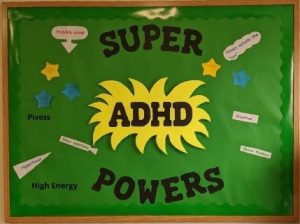
 ADHD, is it a superpower or kryptonite at home or at school? The truth is, it is probably both depending on the situation. All students want to learn, they often feel a great deal of pressure to “learn” and be able to show that learning when it is called for. How can you help your child learn to use their ADHD as a superpower and minimize the effects of kryptonite? Here are three ways to ensure better outcomes.
 Stress. It’s a word we hear every day and I am sure it means different things to each of us (including our kids). The World Health Organization defines stress as, “a state of worry or mental tension caused by a difficult situation. It is a natural human response that prompts us to address challenges and threats to our lives.” Back in the “early” days, stress was meant to protect us from the dangers out in the world and keep us safe. These days it feels more like a byproduct of our everyday lives. Even the general pace of our society can sometimes (no, probably often at this time of year) feel like it is going too fast for us to process and is one stressful event after another.
 October is National ADHD Awareness Month and so in tribute, let’s bring some awareness to how ADHD can interfere in your life and what you can do about it. First of all, ADHD or its side effects, has nothing to do with intelligence. It has a neurobiological (read chemical) basis related to the neurotransmitter hormone levels in your brain. Those chemicals are responsible for transmitting messages from one side of the brain to the other. Sometimes they complete their mission and sometimes you forget part or all of that previous thought.
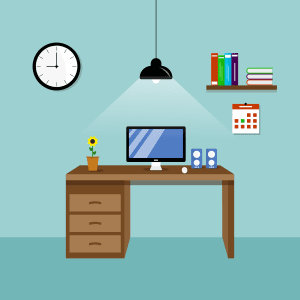 Does your workspace help you focus and get things done or does it just add more challenge to your task? Since we can’t add more time to our day, we have to find ways to be more effective and/or productive with the time we do have. Wouldn’t you agree? We can start with making sure our workspace (whether it is a counter, desk or small table) works for us and our needs.