Put More Summer in Your Life

summer funAhhh, the lazy, hazy days of summer are finally here. Now is the time to create a summer plan that will put more summer into your life. Working five days a week, we tend to cram all our summer fun into the weekends. A summer plan is designed to change the routine and add some time to be spontaneous. Being spontaneous applies to what happens naturally rather than being planned or influenced by external forces and the summer is the perfect time for it.

First you will need to take a look at your schedule to see where you can squeeze in summer. I hope you have a vacation already planned, if not, that should be your first priority. We all have the same 168 hours per week how are you using yours? Are there any weekly or monthly activities that you can cut down or put on hold? Could you get up an hour earlier now that the early mornings are bright? Ease up on the hectic pace and change the routine to see if you can’t gain an hour or two a day for yourself. Block out some time in your planner then if something comes up it will be easier for you to say “No, I am sorry I already have a commitment on that day.”

Just by changing your routine and easing up on some things your attitude will change.

Next add some summer fun during the week such as;

  • breakfast on the deck
  • lunch at the park
  • a picnic dinner at the beach
  • read for 30 minutes in the hammock
  • or camp out in your own backyard with s’mores over the barbecue
  • Stargazing, walking the beach at night
  • riding your bike around the neighborhood are all activities that get you outside in the good weather

Be creative and look for other opportunities to add summer fun to your life and maybe it won’t seem so short this year.

Serendipity, according to dictionary.com, means “good luck in making unexpected and fortunate discoveries.” I wish you a serendipitous summer!

Developing Agency Leads to Independence

Celebrating agency up high on a mountainThe word “agency” keeps popping up in articles I read or podcasts I listen to so I thought I would look a bit deeper into it. Hope you find it helpful.

Agency is defined by the Cambridge Dictionary as “the ability to take action or to choose what action to take.” It is the belief that you have control over your choices and can affect change through the choices you make. How often do you feel that you have an impact on your life through the decisions and choices you make? So, what is agency?

Without Agency

  • Unclear goals
  • Emotions drive beliefs (whether true or not)
  • Indecision
  • Fear of Failure
  • Lack of confidence in your abilities

With Agency

  • Growth mindset (you believe you can do it, maybe just not “yet”)
  • Metacognition (you think about your thinking)
  • See learning as a process and yourself as a learner
  • Self-efficacy (belief in your abilities)
  • Ask open ended questions to problem solve

Agency isn’t just important for adults, but also for children to develop. Students have been through a lot of changes over the last three years and most of them adapted quite well. Some did not do well with the challenges and the constant changes. What do you think makes the difference, between a student who is resilient and adapts quickly and those that become more needy and less capable? Is it fear of failure, lack of confidence, or learned helplessness that interferes with a child’s development of agency?

Opportunities to problem solve and figure out what steps to take next have been replaced with the answers and solutions in order to save time (Ex. Study guides instead of study skills). Think about it, when was the last time your child came to you with a problem and you told them what to do? You may have missed an opportunity to help them develop agency and confidence in their own abilities.

I was surprised to read this article that discussed the increase in a child’s anxieties when you constantly solve their problems for them or make accommodations to diminish their fears. This line jumped out at me. “Kids look to their parents to see who they are, Dr. Leibowitz notes. So, when parents reflect back to them that they are helpless in the face of anxiety, and need to be protected, that’s what kids learn to feel about themselves.” That goes for problem solving too. They question their own abilities and instead rely on a parent or teacher to “save” them.

Learning is a Process

  • It takes time
  • Start small and scaffold with help
  • Focus on the process not the outcome
  • Allow choices – develops ownership
  • Self-reflection leads to metacognition
  • Growth mindset (capable with effort)
  • Leads to self-efficacy (belief in your abilities)
  • Which then leads to agency – knowing you can impact your life through the decisions and choices you make

Encouraging your children to problem solve with your help and building on their confidence develops agency. Isn’t the goal to raise lifelong learners with the confidence to handle anything that comes their way (depending on age of course)?

As an adult, you know yourself best and should keep that in mind when solving a problem or developing a strategy that will work for the way you think. We can’t always predict what success will look like so designing an “experiment” gives an opportunity to try things out without fear of failure. Make sure to think about what could get in the way of your success. Thinking about possible obstacles and then creating a plan for them, helps ensure greater success of your experiment. Each experiment provides more data (more clues as to what will work) even if you don’t get there on the first try.

Each experiment whether successful or not helps you learn more about who you are and who you want to be. It builds on your strengths and helps you find strategies you can use in other instances. This builds your “toolbox” that you can use in other situations. In the end, we don’t set the goals or do the tasks for the “fun” of crossing them off the list, we do them to show ourselves we are capable and in control of ourselves and our actions – and that develops agency.

If you’d like to learn more about helping your children develop agency, then join our Thriving with ADHD in the Family Parent Class starting Thursday, April 27th, 2023 at 7pm ET via Zoom.

What’s In Your Closet?

Caveman ClosetI wonder who invented or designed the first closet. Maybe Mrs. Caveman got tired of tripping over Mr. Caveman’s club again and hid it behind a rock. Whatever the reason, closets can be either a black hole or a great tool for organizing. This month in celebration of Clean Out Your Closet Week, we are tackling the coat closet.

Pick the closet you use most often, it is usually closest to the door you use daily. First step of organizing is always sort.  You can start with sorting the outerwear by season and/or owner. If possible take it out of the closet and sort it so you can actually see how much each person has. As the winter winds down you can see which coats and accessories still fit your child and which will not make it through another season. Decide which coats are regularly worn and which do not fit or are in poor condition. Donate those that you can and store the out of season ones. Do the same for the accessories such as, scarves, hats, gloves and shoes. Take everything else out of the closet and decide if it needs to be stored elsewhere or if it will remain in that closet. (If you do not have a closet near the door that you use most often, try to find a space to put up hooks for jackets and baskets for the other extras for each member of the family.)

Next, look at ways to utilize vertical space. Can you add another shelf? Often the top shelf leaves a lot of unused space up to the ceiling. Add another shelf there and although it will be harder to reach, it makes good use of that space near the ceiling for plastic (labeled) bins for seasonal or seldom used items. A basic shoe rack can double as a removable shelf and shelf dividers can keep things separated. Can you add another rod? Adding a rod off of the existing rod creates a lower rod for children to use at their height. Just remember to leave some space for full length items (if you have any). Sometimes closet space is actually hidden behind the wall of the closet and is difficult to use. If it is 10 inches or deeper, you might want to add some shelves or hooks for easy hang up.

If you like things to be “put away” then you may want to use part of this closet area as a “landing pad.” Use separate baskets, bins or shelves for each family member to store their accessories (hats, gloves, etc.) and backpacks. For young children make sure there are hooks or a rod low enough for them to hang up their own coat and a bin low enough for their mittens, ski pants, backpacks and hats. The fewer steps it takes children to put their things away, the more likely it is that they will do it. Walk them through what you want them to do as they come in the door and for younger children, also add a picture list of the steps to help them create the habit.

Now put everything back into the closet grouped in a way that works for your family whether it be by owner, type of jacket or color – the choice is yours. Make it functional and no one will ask – What’s in your closet?

Got questions? Leave them in the comments box….I’d love to hear from you.

Are We REALLY in Control?

Life out of controlDo you ever feel like your life is a constant juggling act and that if one more thing comes at you, you’ll lose control?

When that happens, it can make us feel “out of control.” It isn’t just that one thing that causes you to drop the ball, but a combination of things. It is different for everyone but ask yourself, is it too many to-dos and not enough time? Or is it disorganization, weak boundaries (read, can’t say no) or unrealistic expectations of yourself or others?

The causes and the solutions are different for everyone. So, if you are looking for solutions to get back that feeling of control for yourself, a coach approach can provide the structure to get you the answers you need.

What is the Outcome You Want, to Feel in Control Again?

Imagine your life without this challenge – what does that look like? If you’re an adult with ADHD, how is ADHD showing up or impacting this situation? Just becoming aware of what is interfering with your ability to get to that outcome is the first step. A coach can help you explore that in a safe, non-judgmental and supportive way. They can help you narrow down your focus to one piece of the puzzle. In our example, maybe it is unrealistic expectations of yourself. Even Wonder Woman has her limits.

What Can You Do to Control The Outcome?

Brainstorm ideas and strategies keeping in mind there is no ONE right answer. You know yourself best and need to keep that in mind so that your strategy will work for the way you think. We can’t always predict what success will look like so designing an “experiment” gives an opportunity to try things out without fear of failure. Each experiment provides more data (more clues as to what will work) even if you don’t get there on the first try. Be clear on what you are committing to doing and how you will measure if it is successful or not. In a coaching relationship, you can ask the coach to hold you accountable for whatever actions you want to do.

Anything that Could Interfere with Your Plan?

A coach wants you to succeed but the responsibility is all yours as they are not attached to the outcome. You won’t be able to predict if your experiment is going to work or not but you can check to make sure there is time in your calendar to work on the experiment. Do you have everything you need to complete the experiment? When/If this works what will you learn about yourself?

Who Do You Want to Be?

Each experiment whether successful or not helps you learn more about who you are and who you want to be. It builds on your strengths and helps you find strategies you can use in other instances. In the end, we don’t do the tasks for the “fun” of crossing them off the list, we do them to show ourselves we are capable and in control of the outcome and of ourselves and our actions.

Now what can you do to take back your control?

If you’d like to learn more about how coaching can help you reach the outcomes you dream of, then let’s set up a 20-minute zoom call to chat. Email me here: laine@thinkinganddoingskillscenter.com

Time Management vs. Choice Management

time or choice

Time management, what does that mean to you? For me, it is my ability to manage the available time I have to get what needs to be done, done. Notice, I said it is MY ability to manage – myself really and manage my choices. We really can’t “manage” time as we have no control over it. It keeps going on its own whether we want it to or not. However, the choices we make of how to use our time can have a huge impact on our productivity, as well as, on how we feel about ourselves and our lives. So, what is choice management?

Choice management is taking time to look at all the options/tasks/choices you have and actually choosing your priorities given the time you have. There are lots of things that “should” be done, but are they really the important stuff or just the easy stuff? Estimate how long you think things will take before you decide if it’s a realistic task to take on.

Choose the top three priorities to begin with and set clear boundaries around the time you will work on them. Don’t wait for the deadlines to get closer as although deadlines help provide a sense of urgency, they often bring extra stress if you miscalculate the time needed to complete it.

Five Ways to Save Time

  • Use the Pomodoro method
  • Time blocking
  • Task batching
  • Create systems and routines to “keep up”
  • Organize and declutter the extras out of your life

It comes down to having to make choices because the reality is you probably can’t do it all. So rather than getting stressed, why not choose wisely and ask yourself…”is this important enough for me to use “x” hours of my day to do? Then figure out which method above, works best for you. Watch out for things that can eat up your time, like distractions, multitasking and not having a plan.

The Pomodoro Method

The Pomodoro method breaks your work time into four, 25-minute blocks of time with a 5-minute break in between each block. The short time frame tricks the brain into thinking the task is more urgent since the clock is ticking. It helps to know that you only have to work on that one “challenging or boring” task for 25 minutes and then you can take a break.

The one thing I have found to help increase it’s effectiveness is to have other people know what I am working on in that block. This body doubling technique also adds accountability to the tasks and helps to keep me on track. If you’d like to give it a try, feel free to join us for Work It Wednesday from 10am-12pm ET via zoom. (Email me for link). At the end, you are encouraged to celebrate your accomplishments and appreciate your productivity (and take a longer break).

Create Systems and Routines

We all want to work “smarter” because that makes things easier on us. Creating systems and routines is a great way to do that. Time blocking and task batching are examples of systems you can use, if they work for you. However, time management is not just about work tasks; you probably also have “home” tasks some of which occur daily.

Setting up systems and/or routines for those things can save you time and stress. For example, if there is no routine of cleaning up the kitchen after dinner (or at least before going to bed) then the morning becomes more of a hassle as you dodge last night’s dirty dishes and cluttered counters trying to get everyone out the door on time. Not to mention the extra time it takes to get dried food off.

Routines work well for weekly tasks too. Pick a day for specific things, like meal planning, grocery shopping, and laundry. Why wait until you have no clothes and there are 6 loads to do when you can keep up by doing laundry once or twice during the week. Much easier to put clothes away if it is manageable.

Organize and Declutter

Lastly, but most importantly, take the time to organize and declutter. Out of all the things you can do, this may save you the most time and frustration. We’ve all wasted time searching for things, things that either didn’t get put back in their “home” or they didn’t have a home to begin with. Your home should work for you not against you.

Create organization so that you know where the things you use daily and weekly belong. Don’t organize so you can stack more stuff into a space. Let the space determine how much can go in there and reduce your inventory. The bigger the load of laundry the longer it takes to get it to its final destination. If your clothes don’t fit in the closet or dresser once they are all clean, then (I’ll be direct) maybe you have too many clothes. Think of how much time you are using/forfeiting to laundry.

Things you use often, should be easy to get to. Why should the big lobster pot take up an entire cabinet when you only use it once or twice a year? It shouldn’t. Make life simpler by clearing counters of appliances and knick knacks you don’t use weekly. You might think it only takes a minute to move things out of the way so you can work, but those minutes add up. You are choosing to use them clearing space when you could be using them for yourself and your family.

Think about the choices you make each day. Yes, it would be wonderful to be able to do all the things we want and need to do but, there are so many options and opportunities that it is impossible to do it all. So, “choose wisely, grasshopper” as a famous TV Kung Fu master once said. Or maybe you’re inspired by Yoda’s line, “do or do not. There is no try.”  Whatever “method” you use for saving time is just one piece of the puzzle, it is the choices you make all day, every day that provides the frame work. Choose what matters to you.

Pick A Slice of ADHD Pie

Pick a slice of life with ADHD pie

January, the start of a new year. There is so much media attention on resolutions, themes, words of the year, etc. that we can easily be overwhelmed and feel like our life with ADHD is not measuring up. Well, I for one, don’t make resolutions – mostly because in the past, they never worked. I also don’t need to wait until January 1st to make a change. However, I also know that making too many changes at once….is probably not going to turn out well. So, this year, let’s try something different. Let’s pick a slice of ADHD pie to get started.

New Approach

You may have seen other “Life Wheels” similar to the one above. I designed this one with categories that relate to areas that can be challenging (or mostly ignored) for those living with ADHD.
The idea is to picture each piece of pie as being divided into 10 sections from the point in the middle to the outside edge. Ask yourself where you would rate yourself for each category from zero to ten. For example, the health category (and feel free to change these to match the areas of your life) how would you rate your health right now? Let’s say it is a 6. Mark off where a “6” might land on the pie and draw a slightly curved line to connect across. Then continue to all the other categories. Some areas may be rated higher than others. This is just a visual way to indicate areas for improvement (or for growth as coaches would say). Pick an area to focus on. Which one (yes, just one) of these will improve your life with ADHD?

Coach Yourself

        1. What would it take to bring that number closer to a 10?
        2. Why is this area important to me?
        3. What impact will an 8 or a 10 in this area have?
        4. What can I do to improve in this area? (Brainstorm all ideas)
        5. What three things can I do to make a difference in this area?

Action

        1. Pick a simple, single step action to take.
        2. When will I take this action? (Put it in your planner or phone)
        3. What can I do to make this step easier?
        4. How will I reward myself at the end of the month?
Using our example from the health category, maybe I make a healthy meal plan before I go to the grocery store. Or put my workout clothes out the night before or will I take a walk at lunch time? All simple things, that are being blocked out by other less important things or the busyness of my day. If I really want that 6 to get to an 8, then it starts…..tomorrow:-) How about you? Please share your thoughts and strategies on our Facebook page.
Related Articles from the Archives:
Look Back Before You Leap Forward in 2022
Routines, Rituals and Dopamine, Oh Yeah!

What Brings Out the Magic For You?

Not sure how it happens, but once December hits, you can feel the increased tension in the air and see it all around. I do my best to stay positive and keep my Christmas spirit up. However, some people seem to forget there are other people around them and that increased tension seems to shut down their brains Not you readers! 😊

So, this year, I am taking a hint from Cas at Clutterbug, to make a list of things that make me happy at this time of year. She called it a bucket list, but I am calling it a menu. On a menu, I can pick and choose my options and there is no competition to “eat it all.” As Cas mentions, it is easy to get “distracted” by the hustle and bustle and the list of to-dos.  That is when we miss out on the “magical” moments that the season has to offer. So, this year, let’s make a menu of the simple, no fuss things that bring us joy and then include something each day that makes us smile.

Here’s a few of my ideas to get you started. You already know the kinds of things that bring a smile to your face, so it should be easy for you to make your own list. Just be sure to add something that brings the magic to your day. Get your family involved too – everyone needs more magic.

Magic Moment Menu

      • Have a cup of hot chocolate with marshmallows (spiced cider or peppermint tea, whatever you like best)
      • Drive around your town to check out the lights
      • Bake cookies in fun shapes or a gingerbread house
      • Cas’ suggestion: “do something kind for a stranger”
      • Watch Hallmark
      • If there is snow, build a snow something….(we’ve made a dragon, giant turtle, reindeer and Santa, in the past)
      • Take a walk in the woods (even better if there is some snow)
      • Read a holiday story
      • Play Christmas charades or trivia with the kids
      • Sit in the dark with only the Christmas tree on and breathe

You get the idea. Take some time to breathe and take in the magic of this time of year. It all gets done, you know it always works out, so why not take time to enjoy those little moments. They add up to some great memories.

Wishing you all the magic of this time of year no matter what holiday you celebrate.

Routines, Rituals and Dopamine, Oh Yeah!

Rituals and routines are good habitsDo you struggle to think, problem solve or make decisions during the day? If you end up feeling overwhelmed it may be because there are just too many things swirling around in your brain. The term, “brain bandwidth” which simply means, the amount of brain resources you have in the moment, can fluctuate depending on what is going on in your life.

Think about all that your brain is responsible for behind the scenes and then it is asked to think, problem solve, and make decisions all day long too? No wonder it is always trying to “save energy” as Ed Mylett, mentions in his book, The Power of One More. We can’t create more bandwidth, but just like a computer that is slowing down, you can clear out some files to make more space.

How To Save Brain Bandwidth with Rituals

      • Create habits, routines and rituals to help
      • Reduce distractions
      • Make fewer decisions
      • Stop multi-tasking (which is really sequencing and not as effective as one thing at a time)
      • Delegate
      • Reduce your to do list
      • Let go of your phone
      • Get a good night’s sleep
      • Declutter and organize
      • Plan ahead

Let’s talk about habits. A habit (an action that has become automatic) signals your brain to go into “autopilot” mode which uses much less energy. That “automatic pilot” takes away the thought and the argument that happens when the “angel” and “devil” on your shoulders start fighting. When habits result in a positive outcome then your brain is happy. The dopamine that gets released tells your brain – this feels good, let’s do it again.

Habits when strung together become a routine. You already have routines in your life for getting up in the morning, making meals, laundry, going to bed, etc. Where’s the joy in those? No joy? Then maybe you should create a “ritual” rather than a routine.

Greg McKeown, author of, effortless (not a typo) defines a ritual as the “how” of what we do. It “infuses joy into our everyday moments.” Adding moments of joy throughout your day which lightens your day and feels good = more dopamine. He uses Marie Kondo as an example of how little rituals (like thanking that worn out pair of jeans before recycling) can add pleasure to the act of decluttering.

One ritual you may want to think about is a “Close Out the Day” ritual. A routine with added joy, pleasure, or self-care added becomes a ritual. This one ritual is a good habit that will support “future you” and save brain bandwidth also. Creating an end of the day ritual can help you start tomorrow with more focus, motivation and an early “win.”

If you are working in an office, what can you do to set yourself up for success tomorrow before leaving for home and still make it enjoyable? Same question for those of us working from home. Then getting started on your work would be as easy as “plug and play” as my friend, Alison says.

How about a ritual for the home that will create a smoother morning? Aren’t you tired of seeing dirty dishes in the morning? Creating a ritual here is a good habit to build.

We’ve mentioned before about deciding what you will eat, wear and do for tomorrow, to save decision power, but how can you add some pleasure to the process? The more pleasure = more dopamine = more brain bandwidth.

Ways to Add Pleasure to Your Ritual

      • Sitting with your favorite beverage and planning tomorrow’s big 3?
      • Take a walk
      • Spend time with your family
      • Go screen free (don’t panic, even an hour helps)
      • Read or learn something new
      • Journal
      • For some, putting the house to bed is a ritual
      • Add to a “success” list each day
      • Get up earlier so your morning isn’t rushed and enjoy a leisurely breakfast

Sometimes we think that having routines and being “pre-programmed” will be boring and take the joy out of our day. In reality, having routines for the fundamentals of your life, actually frees up brain space, which allows you to be more creative, productive, and less stressed.

A close out the day ritual the night before is a good habit to ensure you start your morning off with more decision-making power and brain bandwidth for the important things. Having routines and rituals actually gives you more freedom and energy for the significant people and priorities in your life. And isn’t that what it is all about?

Related Articles from the Archives:

Is It a Routine or a Struggle? https://thinkinganddoingskillscenter.com/is-it-a-routine-or-a-struggle/

Coffee and Routines? https://thinkinganddoingskillscenter.com/coffee-and-routines/
Stressed at the Speed of Life?

stressed frogAre you feeling stressed today? The pace of our daily lives is so overloaded with choices, decisions and must do’s that we can easily feel overwhelmed. We are influenced to different degrees by everything that is around us. The weather, the news, the traffic, our boss, our family obligations and responsibilities and all the options and choices we are bombarded with takes up brain bandwidth and contributes to our stress level. There are some things that are beyond our control, but there are also things that we can control, that can lessen the pressure or stress we feel. First, let’s figure out…
What’s Stressing You?

  • Communication happens 24/7
  • Online ordering done in one click
  • Less staff so more work – is it any wonder you feel like you can never do enough?
  • Less control over your own calendar
  • Unlimited choices
  • Distractions everywhere
  • Interruptions
  • Lack of boundaries around work and home time
  • Lack of sleep – have your hours of sleep decreased? That can cause difficulties with focus, working memory and other executive functioning skills needed throughout the day

What Can You Control?

Stress is defined as, “ a state of mental or emotional strain or tension resulting from adverse or very demanding circumstances.” (Oxford). How can you reduce that tension?

  • Stop tolerating things that you do have control over. As mentioned in our July newsletter, change is hard but sometimes we don’t even recognize that we should or need to change something that is causing us stress simply because we don’t take the time to look at it. Is it fear of change, is it an old limiting belief that is no longer true or just a big “BUT” that gets in the way? ( I would do that but….).
  • You can say “NO”. This is a tough one because there are so many choices, but are you really making a choice going along because it is easier?
  • If you are frequently distracted by your phone, (it’s a quick dopamine hit) you have the power to decide how often you will check it. Keep a tally of each time you pick it up in one day and you will be surprised. Set a reasonable number of times to check it (if your job communicates that way, this might not be possible). Turn off the general notification sounds and pick specific tunes for text messages from important people that you don’t want to miss. Most notifications can be sent to your fitbit or smart watch, so you really won’t miss them. You are also less likely to be distracted if your phone is not nearby. Also, you can set up the “Do Not Disturb” for an evening free of “squirrel!”
  • Interruptions from people can be politely deferred for a short time if you are in the middle of something. If you allow the interruption, know that it may take you 50% longer to complete your task and you may make more errors (Brain Rules by John Medina p. 87) If interrupted by your own thoughts, write it down and get back to work rather than running off to do that “one” thing.
  • Stop multitasking – you are actually switching between things and losing attention to details and adding time onto each task
  • Declutter – that’s right, clutter can increase your stress. Click here for more insight.
  • Create a simple, nightly reset plan to prepare for the next day and start fresh
  • Lessen the strain on your memory by setting specific days for certain tasks. A basic week plan might have a laundry, grocery, bills, cleaning and/or decluttering day.
  • Take time to take care of yourself. Exercise, eat healthy, get enough sleep and reduce the stress you can control with clear boundaries.

A stressed brain does not think as easily as a non-stressed brain and learning can become more difficult. We all know the health impacts of chronic stress. For those with a neurodivergent brain, you may need to work harder at controlling your environment to make it work FOR you and not AGAINST you.

Taking time to look at what you can control and doing something about it, can really make a difference. The world is stressed enough, do we really need to allow it to impact our health and our homes?

Please share your strategies on my Facebook page.

What Is Bugging You?

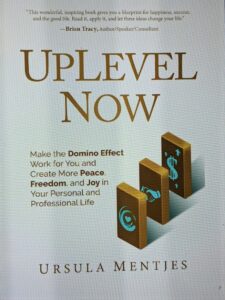
UpLevel your lifeI recently read UpLevel Now by Ursula Mentjes and it made me stop and think about a few things. The book is divided into chapters that are major life categories like health, friendships, money, spaces, time, etc. The author asks questions and gives examples of things you might be tolerating without really realizing it. She shares her experiences in each category with suggestions to help you “uplevel” or kick it up a notch. At the end of each short chapter, she asks three questions.

1. What are the top 3 things you are tolerating in this area?

2. What are the top 3 things you would like to change about that area the most?

3. What is one step you can take right now and when will you take it?

Change is hard but sometimes, we don’t even recognize that we should or need to change something that is causing us stress simply because we don’t take the time to look at it. Is it fear of change, is it an old limiting belief that is no longer true or just a big “BUT” that gets in the way? ( I would do that but….).

Up-level according to the Free Dictionary is an idiom, meaning “to make progress or improve in a specific skill or area of one’s life.” So, for instance, if you wanted to UpLevel your life you might consider ways to get healthier, have less stress, maybe you want to consider switching jobs, end a relationship that drains you, or just get organized enough to be able to find your keys every day. Whatever it is, you first need to figure out what is holding you back?

Maybe you think it will only happen that once, but then weeks or even days later, it happens again. Or the “It’ll go away” pain that doesn’t and you realize you have been tolerating it for 3 months! Or is there some fear from your past that keeps getting in the way? Sometimes it does take frustratingly long to finally realize a change is needed.

What are you tolerating that if you weren’t you would be happier, healthier, richer, better organized or more productive, or whatever it is for you?

If you have ADHD you may have learned early to adapt and change on a whim, you may not have taken the time to look at a problem long enough to think about changing it, instead you end up continuing to tolerate it and just accept it as the way it is.

Yes, ADHD can get in the way and make some things more difficult for you but that doesn’t mean you can’t do something to change it. A big part of coaching is helping people figure out what is getting in the way of them leading the life they dream of. Then breaking it down into manageable parts so that they can come up with strategies, habits, routines and ideas to make it work for the way THEY think. Other people’s suggestions don’t necessarily work for the way you think, but you have to stop and really think about what will work for you.

Also, sometimes lower self-confidence can also play a role. Maybe you feel you don’t deserve to get rid of that problem once and for all – but you do. Read that again….YOU DO!

Three coaching questions:

      1.  Think about what impact it would have on your life, if you were no longer tolerating “x”.
      2.  What is it costing you to do nothing about it?
      3.  Make just one small change at a time (when will you do it?) and watch what happens.

Looking for more help with this – Email to set up an introductory call to see if coaching is right for you.

***********