

 Living and functioning with ADHD is not easy. ADHD is a chemical imbalance in the brain of the neurotransmitters like dopamine and serotonin which can make getting things done difficult. There is also a well-documented lag in developmental skills (especially executive function skills) of about three to five years in students with ADHD. Imagine trying to be a 15-year-old with the skills of a ten or twelve-year-old? Those skills are often things like; the ability to plan things out from start to finish, organization of thoughts and materials, remembering with a weak working memory, emotional control, and knowing when behavior or thoughts need to change which is called cognitive and behavioral shift and focus. Definitely skills needed for homework and life.
Do they ever catch up? Sometimes, but often they have already established their own way of doing things, formed “bad/ineffective” habits or have just given up and no longer feel good about themselves.
Breaking the Cycle of Dependence
If you’d like your child or teen to develop more independence, then first you’ll need to take a look at how you are “helping” your child or teen get things done. Do you often remind them of the next thing they need to do to get ready? “Did you brush your teeth? Where are your shoes?” When you provide the next step by telling them what they need to do, they do not have to think about it. They just have to wait long enough for you to notice that they are ready for the next step. Your child or teen is dependent on you providing the information that they should be doing for themselves. (Read “Are you Enabling or Empowering Your Child?” here.)
So, instead:
-
-
- Ask questions, don’t tell them what to do (Ask, “What do you need to do next?”)
- Help them develop their internal monologue by asking themselves questions (yes, it is helpful for them to be talking to themselves)
- Build self-monitoring skills by helping them check in with themselves and also compare their behavior to others in the same situation. Role playing can be helpful for this.
- Allow for some “cause vs. effect” situations to play out and don’t rescue them (as long as it is not too serious of course but still memorable)
-
Start with Training Wheels
When learning to ride a two-wheel bicycle, you wouldn’t just jump on and go – you’d start with training wheels or a balance bike and practice until you were ready to raise up the training wheels or go to the next step. The same is true when teaching independence skills. Start with the easiest step and provide support. As they become more capable, you can gradually withdraw or change the support. As their agency builds, so does their confidence.
Remember:
-
-
- Break it into the smallest steps and provide support until capable (scaffolding)
- Start with the end in mind and work your way backwards
- Provide short term rewards (rewards are motivating when provided frequently)
- Encourage using a beginning, middle and ending approach to new routines to help them stick
- Body doubling can help
- Think aloud to provide cues for modeling behavior
- Provide visual cues and structure
- Movement breaks help to increase the dopamine
-
Developing Life Skills-Ready to Ride
In order for children to become independent, they need to be able to check in with themselves and monitor how they are doing. It’s also important that they be able to plan ahead and that involves thinking about the future. With ADHD, there is “now and not now” and many things don’t come into focus until they are really close. Helping your child/teen develop routines that work for them and are consistent, will help them thrive and avoid that last minute adrenaline rush (it actually wears them down).
Practice, Practice, Practice
-
-
- Develop a morning routine that gets them off to school on time and calm with everything they need
- Have them set up everything they can for tomorrow to reduce the last-minute searching
- Emphasize eating healthy and regularly and limit the ultra-processed foods that interfere with the brain chemicals.
- The three-to-five year psychological and emotional delay can interfere with your child’s understanding around hygiene as well as, the multiple steps in the process and possibly some sensory issues too.
- Clean body, hair and nails
- Clean clothes (limit choices to outfits they wear-remove extras)
- Take 10 minutes to have everyone pick up their things including their bedroom
- Create a wind down routine and a bedtime routine that helps them get the hours of sleep they need.
- Sundays are a great day to reset for the upcoming week.
- Use a “done list” to emphasize progress
-
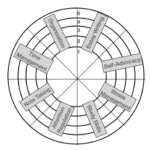
All of these skills have multiple steps and so you can use the Life Wheel (see below from Cindy Goodrich) to find out where to start. On a scale of 1-5, mark where your child/teen thinks they are for each skill. Then pick the lowest and start with building that routine. The summer is a great time to start working on the routines that matter the most. You’ll be building agency, confidence and capability!
Living and functioning with ADHD is hard, so praise your child and teen’s effort often and wherever you can. Your child is learning to develop the life skills that will help them succeed in a world that is not ADHD friendly and any effort is noteworthy.
The Life Wheel can use any categories you feel are needed. (As listed: self-advocacy, stress management, study skills, attention regulation, note taking, time management, organization and essay writing.)
Other Examples:
-
-
-
-
-
- Get ready independently
- Hygiene practices
- Bedtime routine
- Self-monitoring
- Personal relationship skills
-
-
-
-
Two apps to help: Habitica and Forest and the Life Wheel to get you started.
What is one question your child or teen asks you daily that you know they know the answer to?